Tips and strategies to create and implement your business plan.
View here or click this link to view on BrightTalk: http://www.brighttalk.com/r/TcX

Time management solutions for busy people - organise your business, your life and have fun.


Networking Tips #15 It's Not Who You Know
 While you might meet a lot of people at your various networking meetings, it's not just about the people you meet but also about the people they know. So you need to make it easy for people to recommend you.
Quite often you'll find business coming indirectly from a referral from someone you might have met at a networking meeting. They knew enough about you and your business that they felt comfortable in passing on a referral to someone they know.
If you know 100 people and they each know 100 people, then your 'area of influence' has just expanded to 10,000 people. It's how LinkedIn works - your connections are connected and can act as introducers and referrers.
As they go about doing their business, they may well come across people who need your products or services and if they're in a position to refer you - they probably will.
So, when you're out networking - don't dismiss the people you're meeting just because they don't seem to be the 'right' sort of people.
Get to know people, build a relationship with the people you network with. If you've made an impact, if you got your message across - you never know who they know and where those referrals will come from in the long-term.

Drop-outs, No-shows And Last Minute Cancellations

Anyone who runs meetings, events or workshops knows that there is always the risk of 'drop outs', 'no-shows' and last minute cancellations.
Social or business, free or paid. If it's free it's more likely to occur - there's no financial penalty for not attending. It's just as likely to happen for paid events. Whether it's a few pounds or hundreds, there will always be people who just don't turn up.
For a business running events with a limited number of places, this is annoying and frustrating.
You've turned people away from the event because it's full, only to have people drop out at the last minute.
You've planned and budgeted based on numbers attending - last minute cancellations and 'no-shows' mean you still have to pay for the places booked.
Expect it to happen and plan accordingly:
- Keep a waiting list - so you can fill any last minute places that become available.
- Get full payment or a deposit upfront and have a cancellation/refund policy. No refunds within 24hrs, 48hrs, a week before the event. At least you won't be out of pocket.
- Invoice them for the missed session - make this clear upfront.
- Send out reminders before the event - a week, a few days and the day before or on the day.
- Overbook - allow for the inevitable cancellations and no-shows and book a few more places than your 'maximum' or have some leeway on numbers.
- Mark their card as 'unreliable' or as a 'no-show' and take some of the above steps to ensure they turn up next time, if there is a next time.
So what are the likely causes of these no-shows and cancellations?
- They drop your session when something 'more important' turns up (usually pressure of work).
- They've double-booked .
- Lack of planning means they don't really know what's happening from one day to the next.
- They realise at the last minute they can't make it - often due to a work-related issue.
- They say yes or book up with no real intention to attend.
- They just forget - it does happen (probably due to pressure of work, stress, lack of planning, poor organisation).
- Overcommitment - people will often say yes to several things and realise later they've overcommitted.
- A genuine emergency comes up and they can't make it or can't get there in time.
Avoid becoming a 'no-show' or being labelled as unreliable.
- Check your diary before you commit to an event.
- Look far enough ahead so you know what's coming up.
- Be realistic - don't overcommit.
- Set reminders in advance - one week, one day, so you're less likely to forget.
- If you have to change your plans, give people as much notice as possible. Better some notice than no notice.
- Send a substitute - if you've already paid, can someone else attend in your place?
- Have the organiser's contact details with you, include them as part of the diary entry - if you get delayed or have a last minute emergency, let them know.
How have you been impacted by 'no-shows' and last minute cancellations?
What reasons, if any, have you been given when people cancel or don't turn up?

July Newsletter: Take Control Of Your Email
"Are you deluged with daily emails? Is your Inbox full of emails you never get time to read?
- 2 million emails are sent every second,
- 62% of us check work emails at home or on holiday,
- a third of office workers suffer from "email stress.
Do you waste time on your emails rather than getting on with more important work? Are you checking your email throughout the day?
Take control of your Inbox so that you don't waste time and can get on with the more important tasks ..."
Read the rest of the article here.
Register for the free monthly newsletter and get additional tips, information and resources to help grow your business and improve your work life balance direct to your inbox once a month - www.clareevans.co.uk.
- 2 million emails are sent every second,
- 62% of us check work emails at home or on holiday,
- a third of office workers suffer from "email stress.
Do you waste time on your emails rather than getting on with more important work? Are you checking your email throughout the day?
Take control of your Inbox so that you don't waste time and can get on with the more important tasks ..."
Read the rest of the article here.
Register for the free monthly newsletter and get additional tips, information and resources to help grow your business and improve your work life balance direct to your inbox once a month - www.clareevans.co.uk.
Time Off Sick - Are You Faking It?

Sickness costs UK business £32bn a year and as many as one in three employees are 'faking' sickness to get time off.
Depression and boredom were given as the main reasons for faking 'sickies'.
The underlying reasons for these need to be addressed - if they're ignored the problem will persist.
"Employers would be well advised to tackle the issues of sickness and workplace absence head-on, as these seriously impact efficiency and hit their balance sheets."
Sometimes you just feel like you need a break - especially if you're constantly under stress, working long hours or have an ever increasing workload - another issue that needs to be addressed.
Having a day off can be a good way to recharge your batteries. Taking frequent breaks is something I advocate and can be difficult in an office environment - feeling guilty while others have their heads down working. But regular breaks can actually increase productivity.
Parents often have to take a day 'sick' when it's their children who are ill. Not being able to get last minute childcare they need to take time off work to look after them.
Sickness has an impact on fellow colleagues who have to pick up the workload of missing employees, as well as the additional backlog on returning to work.
Flexibile working can make a difference - varying start and finish times, allowing employees to work from home.
A fit and healthy workforce is less likely to be sick. Think about your own health when you're planning your time and make time for healthy eating and exercise.
What reasons or excuses have you made or heard for being off sick?
As an employee - how do you handle sickness in your organisation?
If you're self-employed or freelance do you ever take time off sick?

Networking Tips #14 Any Time, Any Place, Any Where

You don't need to attend a specifically organised business networking event in order to participate in or benefit from 'networking'.
As the Martini Ad used to say - networking can be done, "any time, any place, anywhere" (for those of us old enough to remember it).
You never know who you might meet or where you might be when an opportunity arises.
Networking is about talking to people and building relationships and that can be done anywhere.
- Chatting with someone in a queue.
- Out at a social event.
- At training events or meetings.
- While away on holiday.
- Indulging in a favourite pastime or activity.
This doesn't mean you're forcing your business down everyone's throat at every opportunity - after all, that's not what networking is about anyway.
It does mean that you never know where a random introduction might lead or what opportunities can arise from any conversation you have - formally, informally, at home or at work.
Don't limit your networking. Where have you found opportunities to network that you didn't expect?
Image via Wikipedia

Always On. The consequences of hyper-connectivity.
I just happened to catch Dominic Arkwright's Off The Page on BBC Radio 4 last night and the topic was - Always On. The consequences of hyper-connectivity. Involved with the discussion were Jemima Kiss of the Guardian, William Powers - author of Hamlet's Blackberry and Harry Eyres columnist of the FT's Slow Lane.
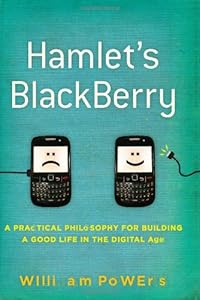 Cover via AmazonIn these days of wireless technology and social media - once you're on, it can be hard to get away from it. The constant urge to check your messages, your email, your tweets, your Facebook page.
The increasing occurrence of people being face-to-face but not really communicating - at least not with each other. Being in each other's presence but feeling the need to engage with one of their many gadgets at the same time.
How many times have you been out for a meal and seen people talking on their mobile phone or perhaps sitting in your local coffee shop, facing each other while on their laptops? Yes, I'll admit to tweeting when in meetings - but it's usually meeting related and for the purposes of sharing (no, really).
Are we really paying attention to each other or aware of what's going on around us, if we're constantly plugged in and switched on.
Social media and all this hyper-connectivity is a great distraction. It's all too easy to fritter away a whole day, engaging with one variety of technology or another and not actually doing anything productive or constructive.
There was much discussion on the programme about the size of their respective email Inboxes. Is this an indicator of 'busyness', importance or just a lack of organisation?
If you don't have a strategy for dealing with all those emails, they can quickly add up. I'm often helping people to tackle their mountains of email, creating order out of chaos - in fact it's come up twice in discussion today.
You need to know when to draw the line between the virtual/social media world and the real world right in front of you and what's going on all around you.
William Powers likened it to a sugar addiction - that rush, the buzz of excitement, the intensity of the experience. How do you feel when you're offline or away from technology for any length of time?
Jemima described how she spent four weeks offline and totally disconnected (see article link below).
When I took a sabbatical several years ago, I remember it took about six weeks to totally switch off from work. Yes, I'd been enjoying visiting new places and meeting new people since day one but it was only when I was in to week six that I realised I wasn't even thinking about work.
I wonder how different it would be now that we're all so much more connected. Back then social media didn't exist to the same degree and mobile phones were the main intrusion.
Less is more
I've been in family situations where everyone is on their laptop - having conversations with people who aren't in the room. Now if this family includes teenagers, the chances are they're on Facebook, Twitter, Myspace and 'chat' all at the same time!
Time to Think
 Image by DonkerDink via FlickrHarry mentioned the importance of finding time for thinking. It's certainly something I don't see people do enough and at a time when everyone is trying to do more and more, we actually need to do less and leave more time for doing nothing.
While writing my book, I certainly felt the need to take frequent breaks to just switch off my brain from the computer and the screen in front of me and go and do something completely different to let the ideas mull over, or allow something to pop into the blank slate that I'd been staring at for the last few hours.
Switching off is just as important as being permanently connected. I have my best creative ideas when doing something else - usually a walk, being outside, gardening.
Make time in your life that doesn't involved always being connected.
Cover via AmazonIn these days of wireless technology and social media - once you're on, it can be hard to get away from it. The constant urge to check your messages, your email, your tweets, your Facebook page.The increasing occurrence of people being face-to-face but not really communicating - at least not with each other. Being in each other's presence but feeling the need to engage with one of their many gadgets at the same time.
How many times have you been out for a meal and seen people talking on their mobile phone or perhaps sitting in your local coffee shop, facing each other while on their laptops? Yes, I'll admit to tweeting when in meetings - but it's usually meeting related and for the purposes of sharing (no, really).
Are we really paying attention to each other or aware of what's going on around us, if we're constantly plugged in and switched on.
Social media and all this hyper-connectivity is a great distraction. It's all too easy to fritter away a whole day, engaging with one variety of technology or another and not actually doing anything productive or constructive.
There was much discussion on the programme about the size of their respective email Inboxes. Is this an indicator of 'busyness', importance or just a lack of organisation?
If you don't have a strategy for dealing with all those emails, they can quickly add up. I'm often helping people to tackle their mountains of email, creating order out of chaos - in fact it's come up twice in discussion today.
You need to know when to draw the line between the virtual/social media world and the real world right in front of you and what's going on all around you.
William Powers likened it to a sugar addiction - that rush, the buzz of excitement, the intensity of the experience. How do you feel when you're offline or away from technology for any length of time?
Jemima described how she spent four weeks offline and totally disconnected (see article link below).
When I took a sabbatical several years ago, I remember it took about six weeks to totally switch off from work. Yes, I'd been enjoying visiting new places and meeting new people since day one but it was only when I was in to week six that I realised I wasn't even thinking about work.
I wonder how different it would be now that we're all so much more connected. Back then social media didn't exist to the same degree and mobile phones were the main intrusion.
Less is more
I've been in family situations where everyone is on their laptop - having conversations with people who aren't in the room. Now if this family includes teenagers, the chances are they're on Facebook, Twitter, Myspace and 'chat' all at the same time!
- Implement technology free zones. One room in the house where technology (mobile phones and texting, laptops and social media are banned).
- Ban mobile phones from meal times. Yup, those teenagers at the dinner table, texting their mates that seem to be surgically attached to their mobile phones. Those of us who are old enough to remember a time before the mobile phone, may find it easier to do. Others can't imagine life without them.
- Know when to switch off. Deal with the 'crackberry' addiction and take time out when you're totally unconnected.
- Keep the weekends technology free as much as possible, especially if you spend most of your working day 'connected'.
Time to Think
Image by DonkerDink via FlickrHarry mentioned the importance of finding time for thinking. It's certainly something I don't see people do enough and at a time when everyone is trying to do more and more, we actually need to do less and leave more time for doing nothing.While writing my book, I certainly felt the need to take frequent breaks to just switch off my brain from the computer and the screen in front of me and go and do something completely different to let the ideas mull over, or allow something to pop into the blank slate that I'd been staring at for the last few hours.
Switching off is just as important as being permanently connected. I have my best creative ideas when doing something else - usually a walk, being outside, gardening.
Make time in your life that doesn't involved always being connected.
Subscribe to:
Posts (Atom)